This website is made possible by readers. I may earn a small commission when you buy through the links in this article at no extra cost to you. Learn more.
Details
- Price $995 at carlfriedrik.com
- Material Polycarbonate, aluminium frame, leather detailing
- Weight 15.21 lbs / 6.9 kg
- Dimensions 2.1" (w) x 3.1" (h) x 1.3" (d) / 54 (w) x 80 (h) x 34 (d) mm
Overview
Over the years, as I entered my cool uncle era, my travel packing patterns have shifted. From minimalist one-bag travel to full-on roller luggage. With a preference for slow travel, longer trips that span multiple countries mean I stay longer in the same places. Bringing along more would make me feel more comfortable and at home, and thus, a luggage has become a more fitting container for my needs.
My Rimowa Original Trunk has been serving this purpose well. At the time, I resisted the Original Trunk L because I thought I would hit the 20 kg weight limit on most economy seats before I fill the capacity limit. I was right since my Original Trunk often goes over the limit with what feels like not much packing.
However, as settle down a little more, and travel less, my mile churning game is earning enough miles to redeem a business class flight or two a year. And with business class's 40 kg limit, a larger luggage would make better use of that allowance. When I found myself with the chance to try out the Large Check-in, its 125-litre capacity was enough to get me excited.
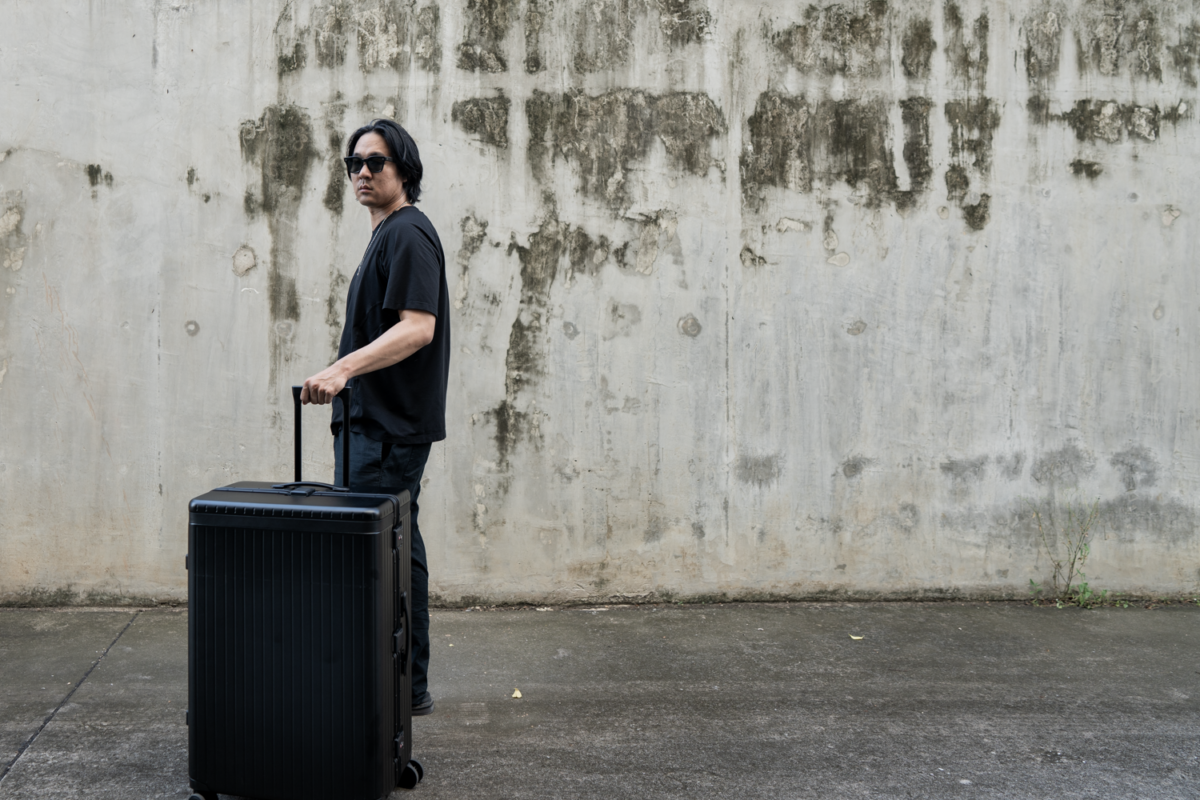
Carl Friedrik was founded in London by Swedish brothers Niklas and Mattis Oppermann, initially focusing on leather goods before expanding into luggage. The brand's approach has always been fairly easy to spot: clean, Scandinavian-influenced design, naturally minimalistic aesthetics, restrained branding and premium materials.
While Rimowa has shifted my taste towards aluminium suitcases, the added weight still bothers me. My Muji polycarbonate suitcases reminded me how fond I was of the abuse they could take at that weight class. The Large Check-in feels a little like an in-between; a nice middle ground between the luxurious Rimowa and the reliable Muji.
Style
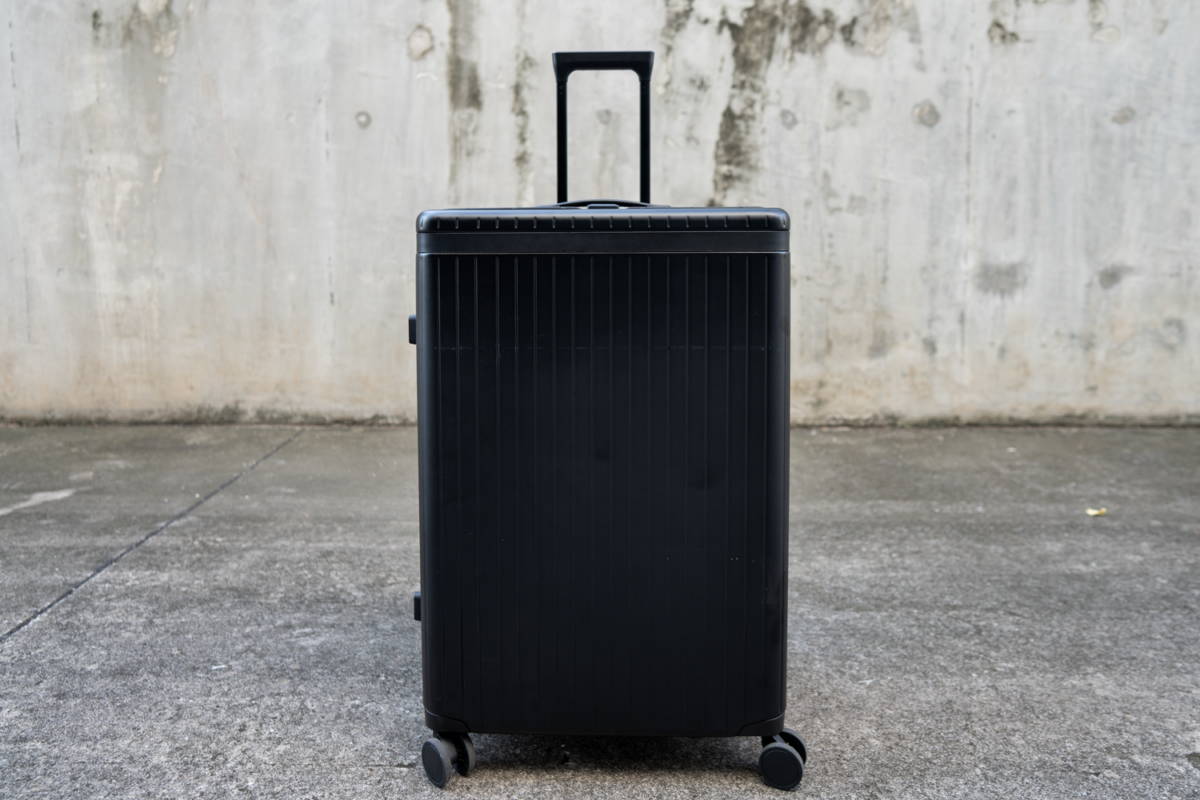
The Large Check-in aligns well with my long-standing obsession with minimalistic, black products. The black/black version is about as restrained as checked luggage gets. The shell, aluminium frame and leather detailing are all black, leaving the case with a monochromatic appearance. Black beauty.
Similar to a Rimowa, there is no conventional zipper running around the case, which is a rare sight for polycarbonate luggage. Instead, the polycarbonate shell is held together by an aluminium frame and five TSA-approved locks. The construction gives the suitcase a more substantial, almost architectural appearance than the typical polycarbonate case.
There is very little branding on the exterior. Small hints of it includes a black-on-black print on the top and side handles, as well as the embroidered logo all around the interior. As someone who wants no visible branding on the things I carry, these details are very much welcomed.
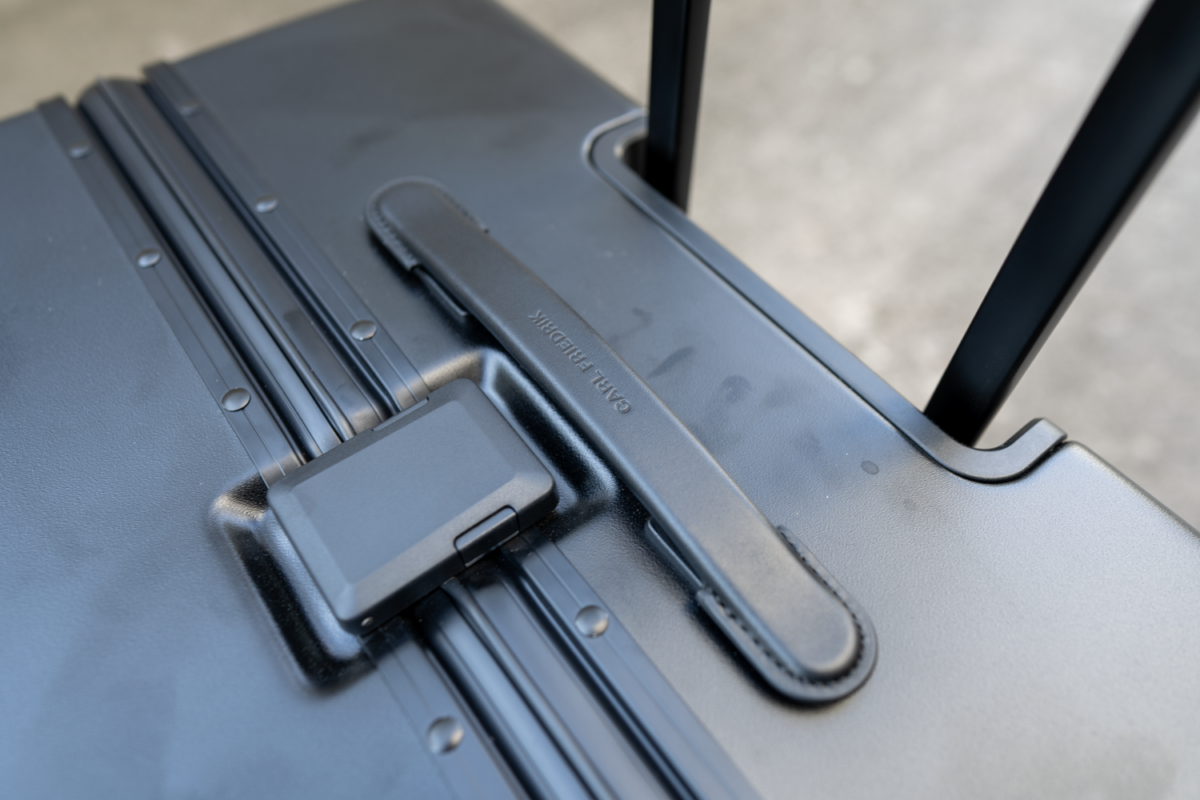
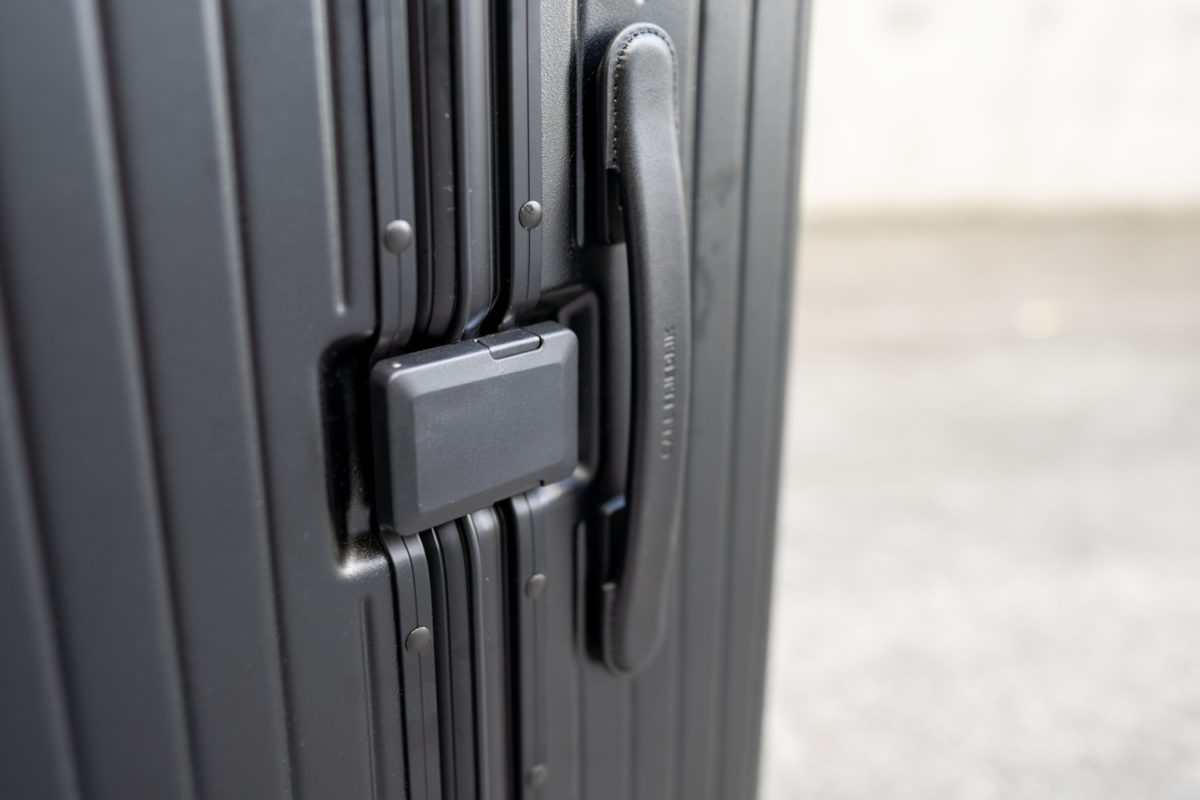
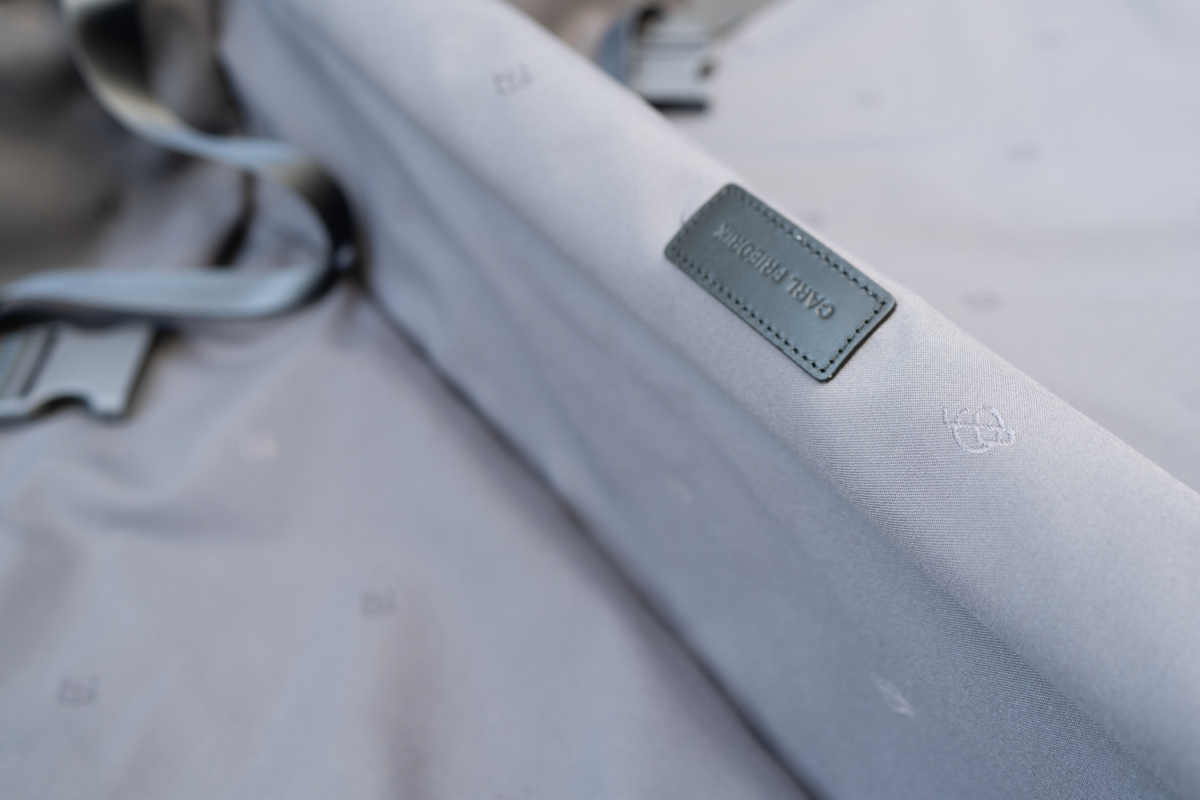
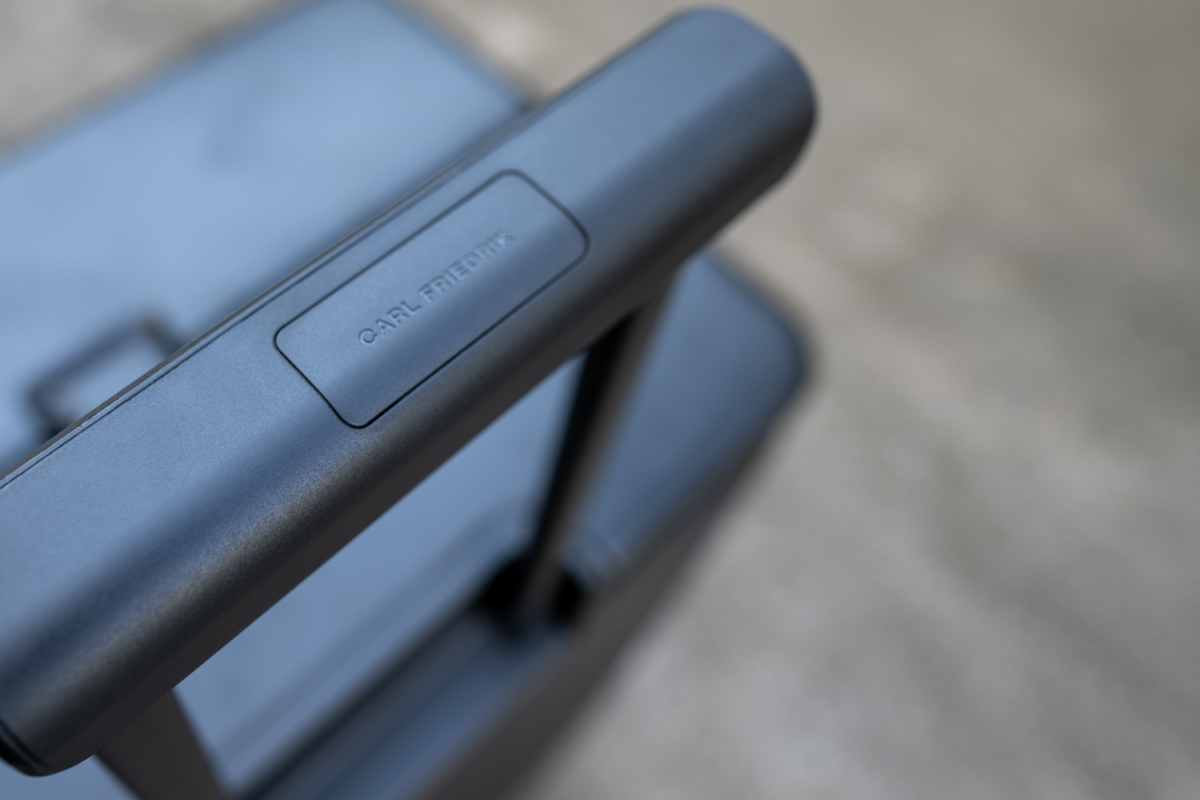
Vertical grooves run across the shell, similar to a Rimowa, but with a unique horizontal bar across the top. That bar, and the handles are finished with leather detailing. The leather detailing is equally subtle, adding some warmth to what is otherwise a fairly technical object. The abundance of locks scattered around the aluminium frame is more subtle than I expected, especially on the black/black colourway. There are rivets along the opening that adds to the industrial look.
There are a lot of similarities with the aesthetics of a Rimowa. And this could be a double-edged sword. It looks premium, but at the same time, it could come across as a copy.
This used to be an ad.
But no one likes ads, so I got rid of them. If my articles helped you, I ask for your support so I can continue to provide unbiased reviews and recommendations. Every cent donated through Patreon will go into improving the quality of this site.
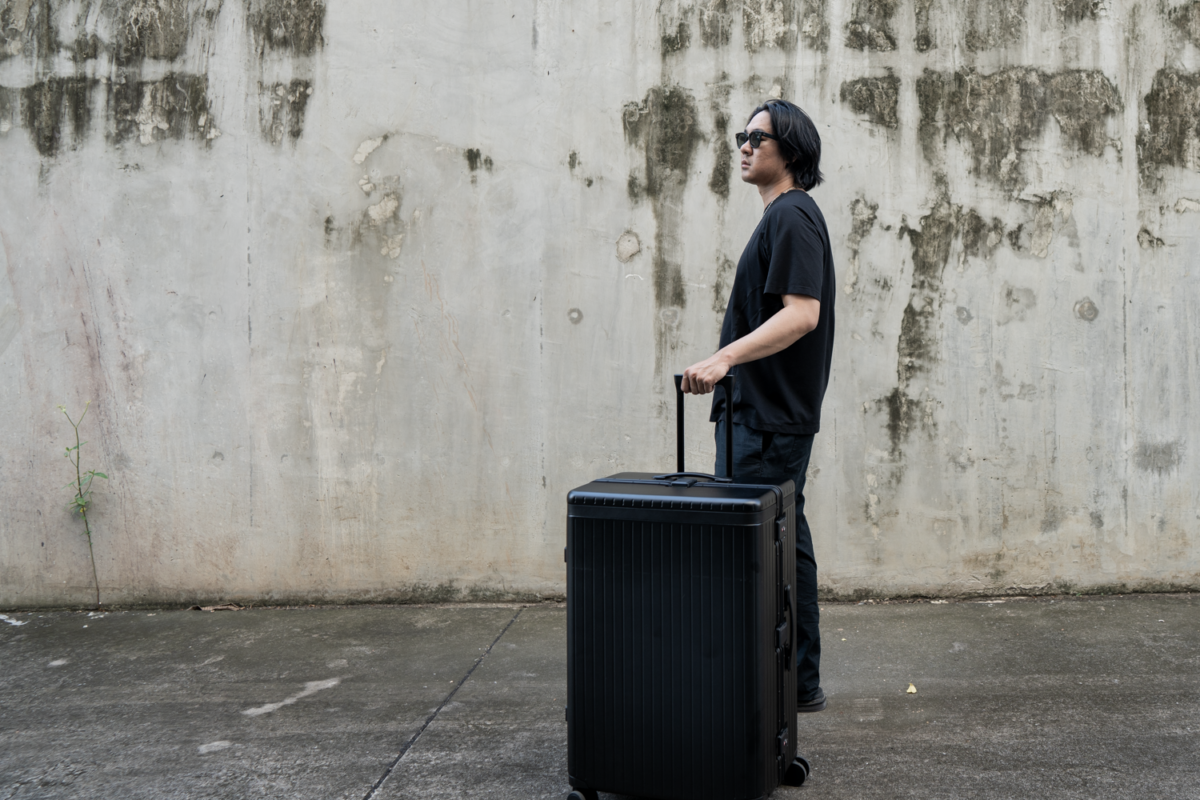
Like a good used Rimowa, however, the finish is not going to remain showroom perfect forever. Scratches are a recurring theme among owners, which isn't particularly surprising for a large checked suitcase. This is luggage that is eventually going to meet a baggage conveyor, a concrete floor and someone who has already thrown 40 other suitcases onto a trolley.
Despite generic black luggage being common at airports, the size and quiet luxury of the Large Check-in looks distinctive enough to stand out on the luggage carousel.
Material
The main shell is polycarbonate, a thermoplastic commonly used in luggage because it combines relatively low weight with impact resistance. Here, the polycarbonate isn't left to do everything by itself. The case is reinforced by an aluminium frame that forms the rigid perimeter and provides the structure for the locking mechanism.
This is what gives the Hybrid its name. It isn't simply a polycarbonate suitcase with some metal decoration attached afterwards. The aluminium frame is integral to how the case closes.
The five TSA-approved locks replace the usual zipper closure. TSA-compatible locks allow authorised security personnel to open checked luggage without destroying the lock, while the frame-style closure eliminates the long zipper that is normally the most vulnerable-looking part of a hard-shell case.
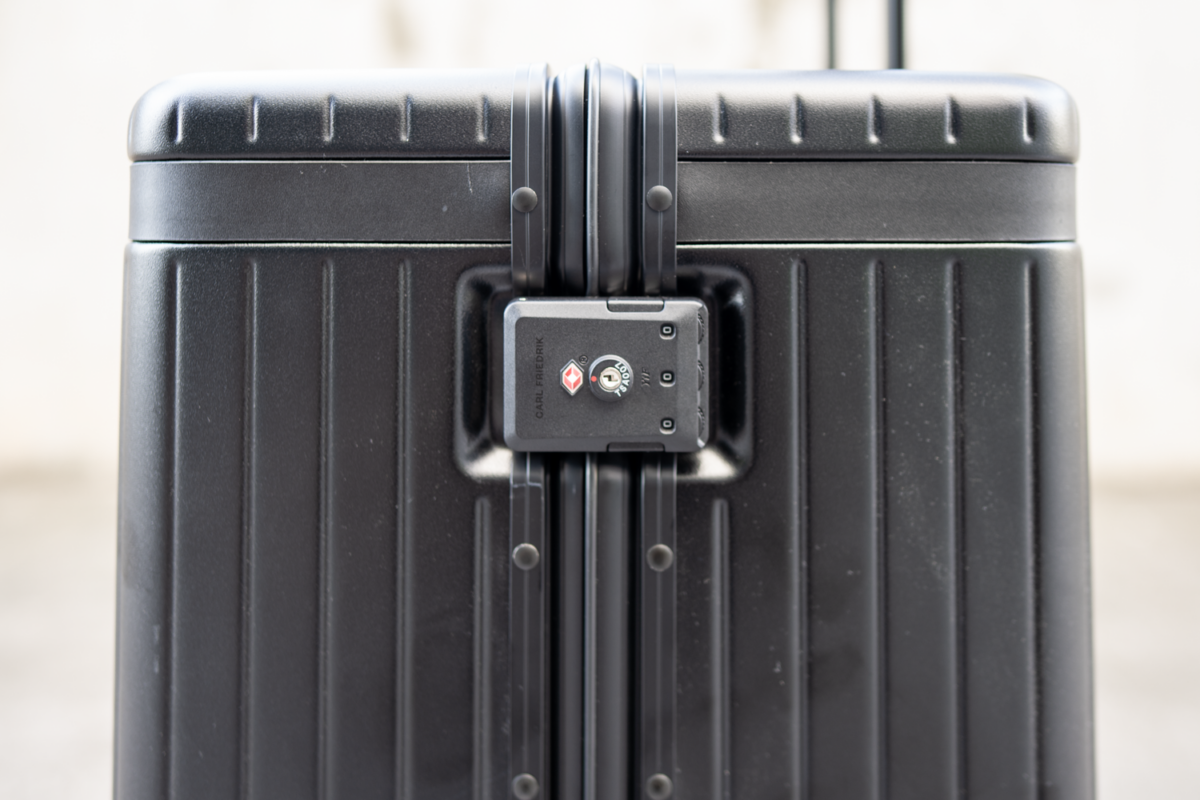
The closure also feels considerably more substantial than the typical zippered suitcase. The rigid junction between the two halves gives the case a very solid feel when opening and closing it, and the multiple latches make the whole thing feel more like a piece of equipment than a disposable travel box.
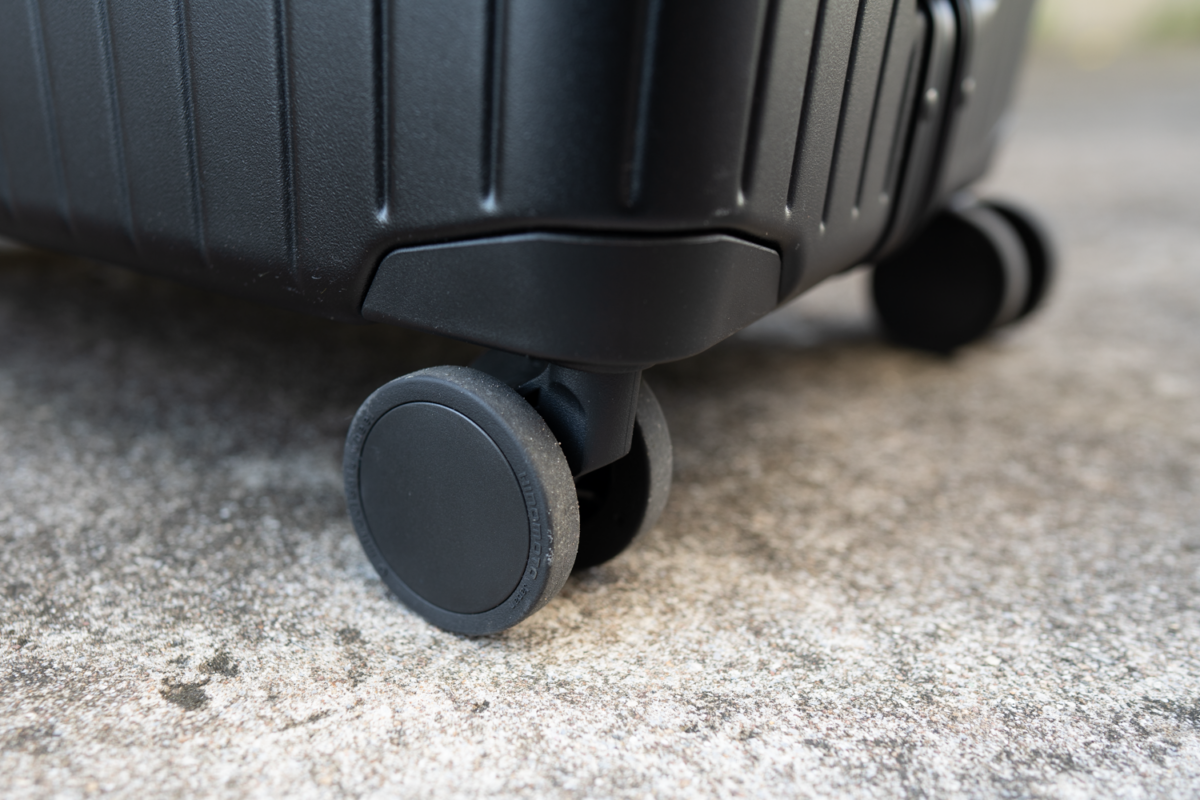
The wheels are made by Hinomoto, a Japanese manufacturer that is well established in premium luggage. The case uses four 360-degree spinner wheels, allowing it to roll upright rather than needing to be tilted and dragged behind you.
The leather detailing uses vegetable-tanned leather. Unlike chrome tanning, vegetable tanning uses tannins derived from plant material and is traditionally associated with leather that develops more character as it ages.
I designed a thing.
I found a 100 year old company that would create these heirloom quality canisters for me. They are handmade and will keep your tea leaves, coffee beans or anything that you need dry for years to come.
or read review
Usage
The important number here is 125 litres, which is the largest of the three Hybrid offerings from Carl Friedrik. That is considerably more space than a conventional large check-in, putting this firmly into long-trip territory. There is enough room for a serious amount of clothing, shoes and bulkier items.
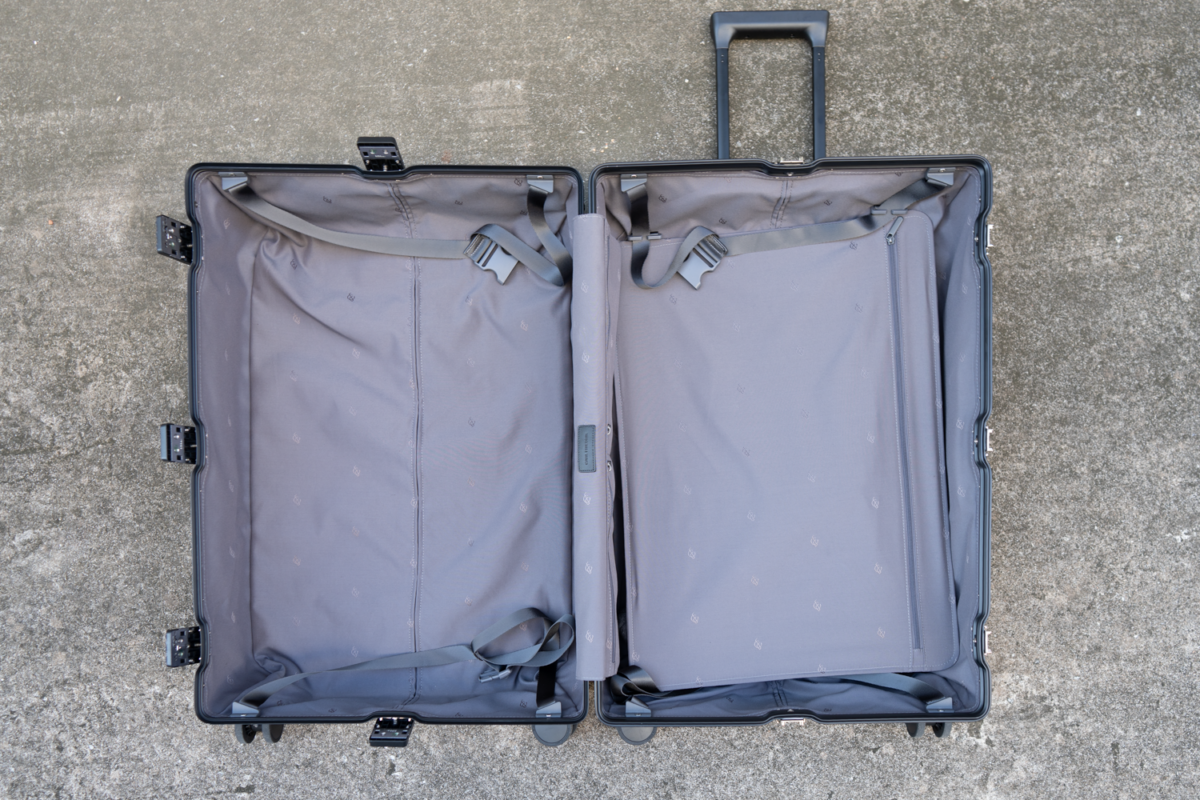
That extra space is particularly useful for longer trips or packing for two people. The case can swallow an amount of luggage that would normally require multiple smaller pieces, although there is an obvious danger of filling every available centimetre simply because the space is there.
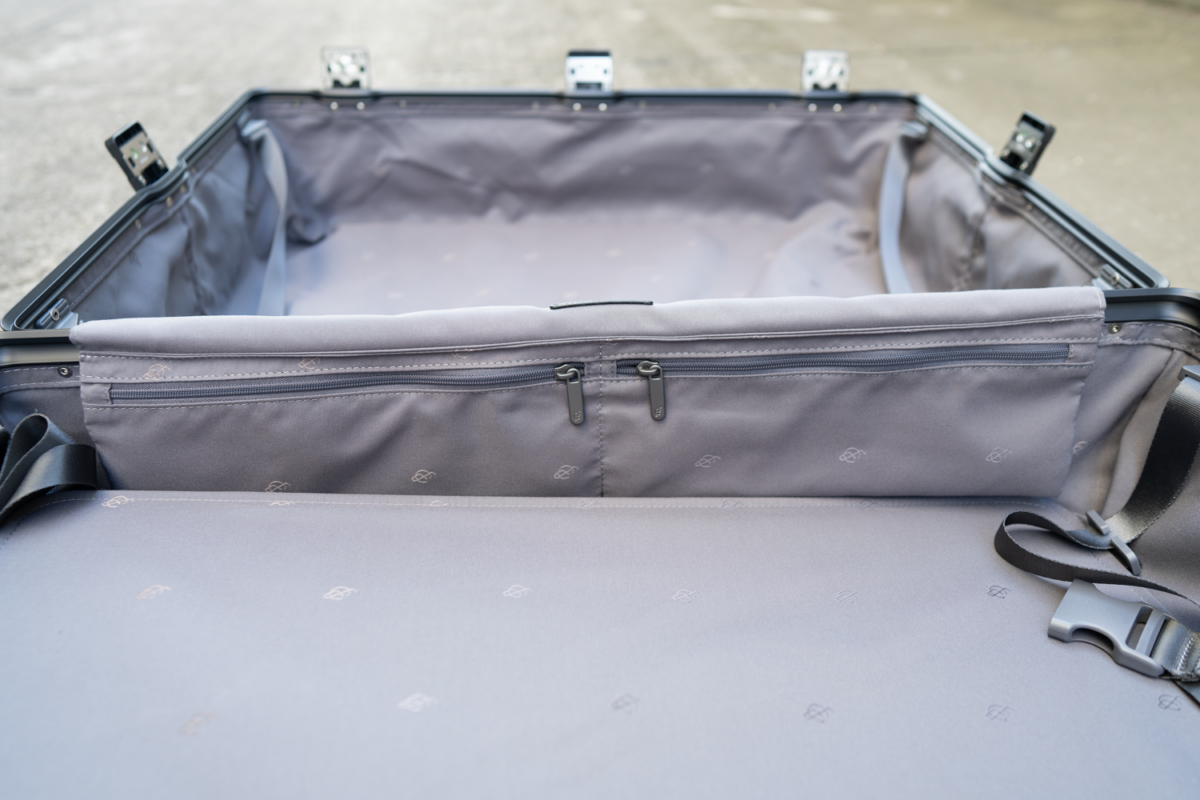
The interior uses two integrated compression straps together with a removable compression pad. This is a better approach than simply giving you an enormous empty cavity and hoping for the best. The compression system helps flatten the contents and keep things in place, although this isn't the most compartment-heavy suitcase around. It follows the fairly open interior layout of the Rimowa I am used to.
The trade-off is the weight. At 6.9 kg empty, there is a lot of suitcase before you've even packed your underwear. If you're trying to stay under a 20 kg economy baggage limit, you'll probably hit the weight before you hit the capacity. This is a suitcase for people who have the baggage allowance to use it.
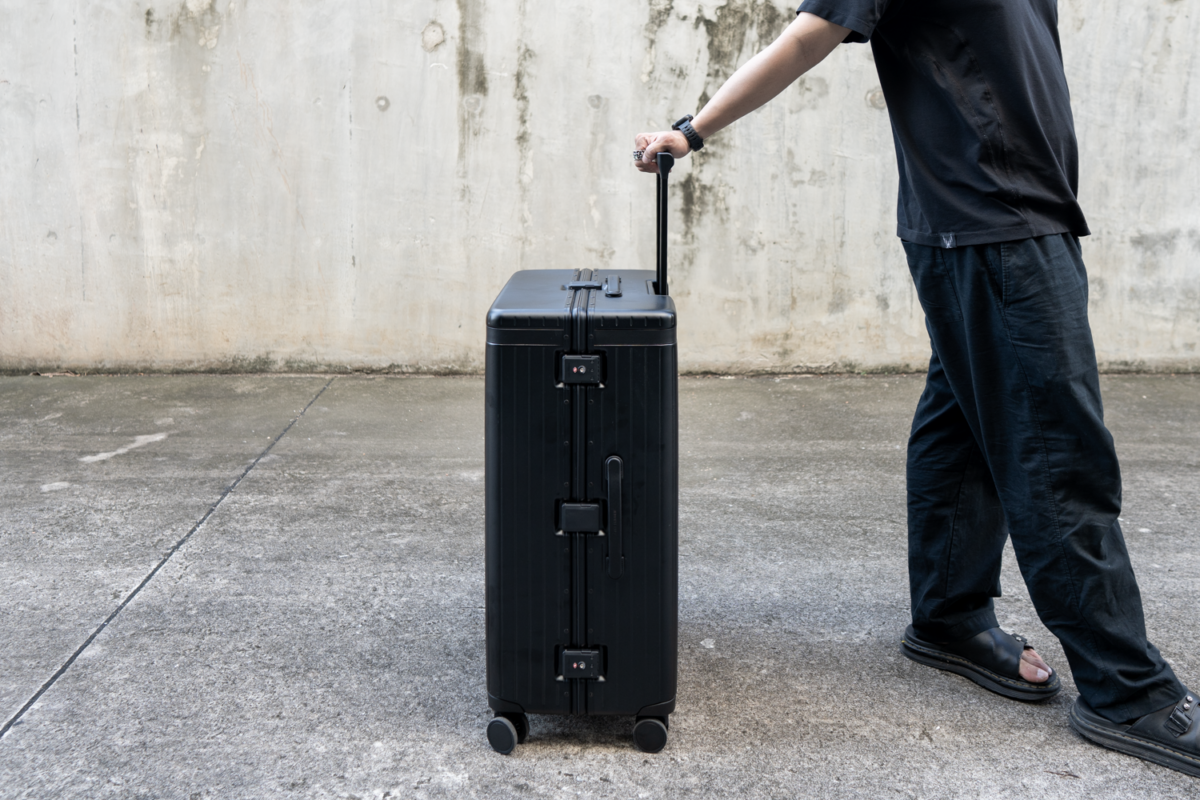
The wheels are therefore one of the more important details. A 125-litre suitcase can become extremely unpleasant once fully loaded, but the four Hinomoto spinner wheels make the Large Check-in surprisingly easy to manoeuvre. Even when fully packed, it rolls smoothly and feels well balanced rather than top-heavy or cumbersome. It doesn't feel like you're steering a refrigerator through the airport.
Most luggage have a two tier handle, which can be prone to breaking, whereas the Large Check-in is just a single tier, which means one piece of metal. While more durable, I found them a little short for the size of the luggage.
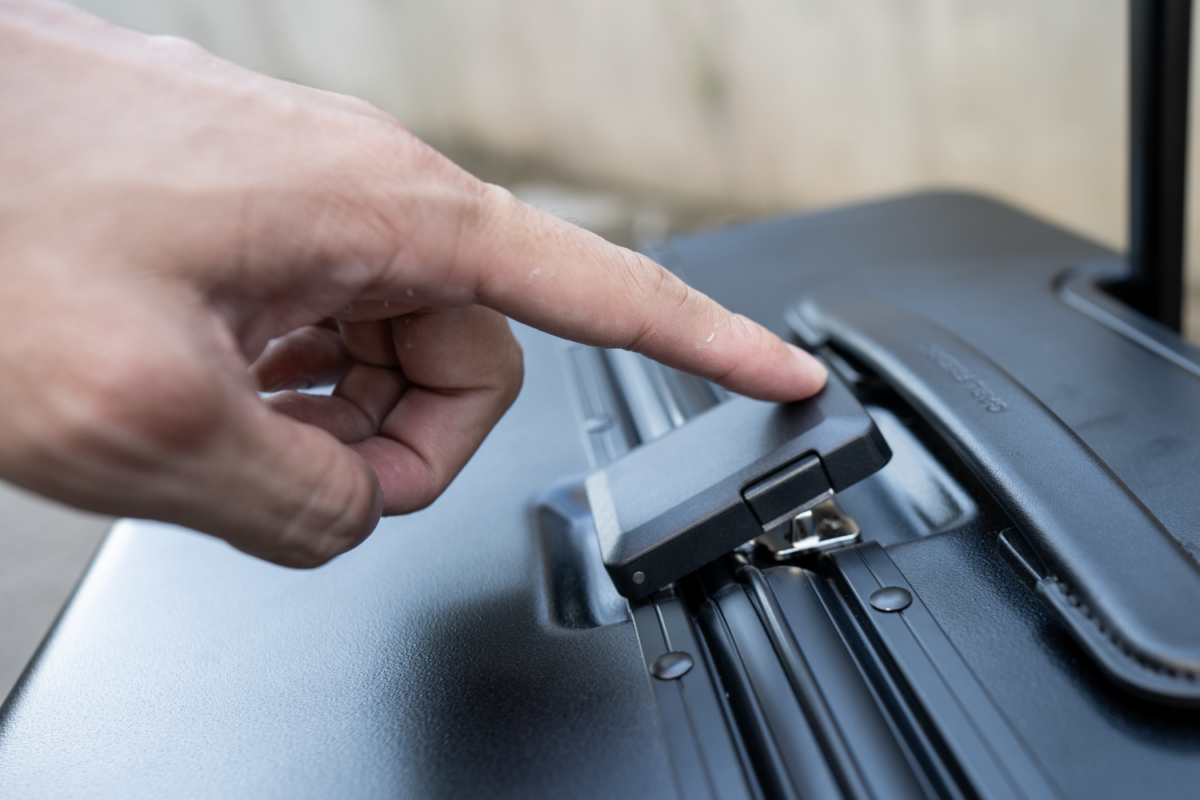
The five locks make the closure feel very solid and eliminate the usual long zipper running around the perimeter. Coming from a Rimowa with two locks, however, having to open and close five of them each time can feel bothersome. Fortunately, these are easier to operate. Press the sides and they open; push down and they close. There is no need to align them nicely and latch them onto the other side like the Rimowa.
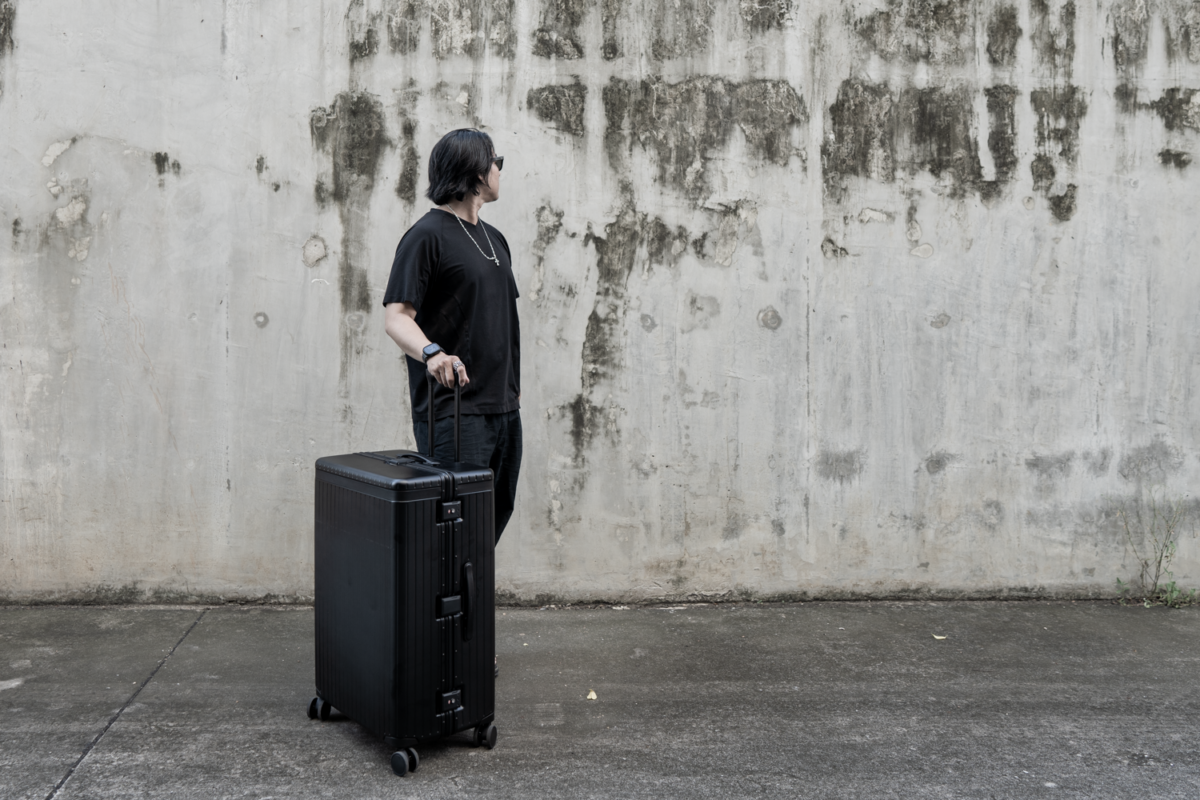
The dimensions are another thing worth checking before buying. At 80 × 54 × 34 cm, the total linear dimensions come to 168 cm, which exceeds the commonly used 158 cm standard on many airlines. That doesn't automatically mean you can't check it, but airline-specific oversized baggage rules are worth verifying before turning up at the airport with this monster.
The polycarbonate shell is designed to take the knocks, but the black surface can pick up scratches. Personally, I don't see that as a serious problem for checked luggage. I see getting scratches as part of the story of my travels.
What matters more is that the underlying construction feels substantial. The rigid aluminium frame, solid latches and good wheels make the case feel built for repeated travel rather than designed to look good for the first six months. Carl Friedrik also backs the luggage with a lifetime warranty covering functional faults such as broken handles, zippers, stitching and hardware. Cosmetic damage and normal wear, however, are excluded.
Overall, the Large Check-in is a fairly simple proposition: enormous capacity, excellent manoeuvrability and substantial construction, traded against considerable weight and size. If you have the baggage allowance for it, 125 litres is a lot of suitcase to work with.
Conclusion
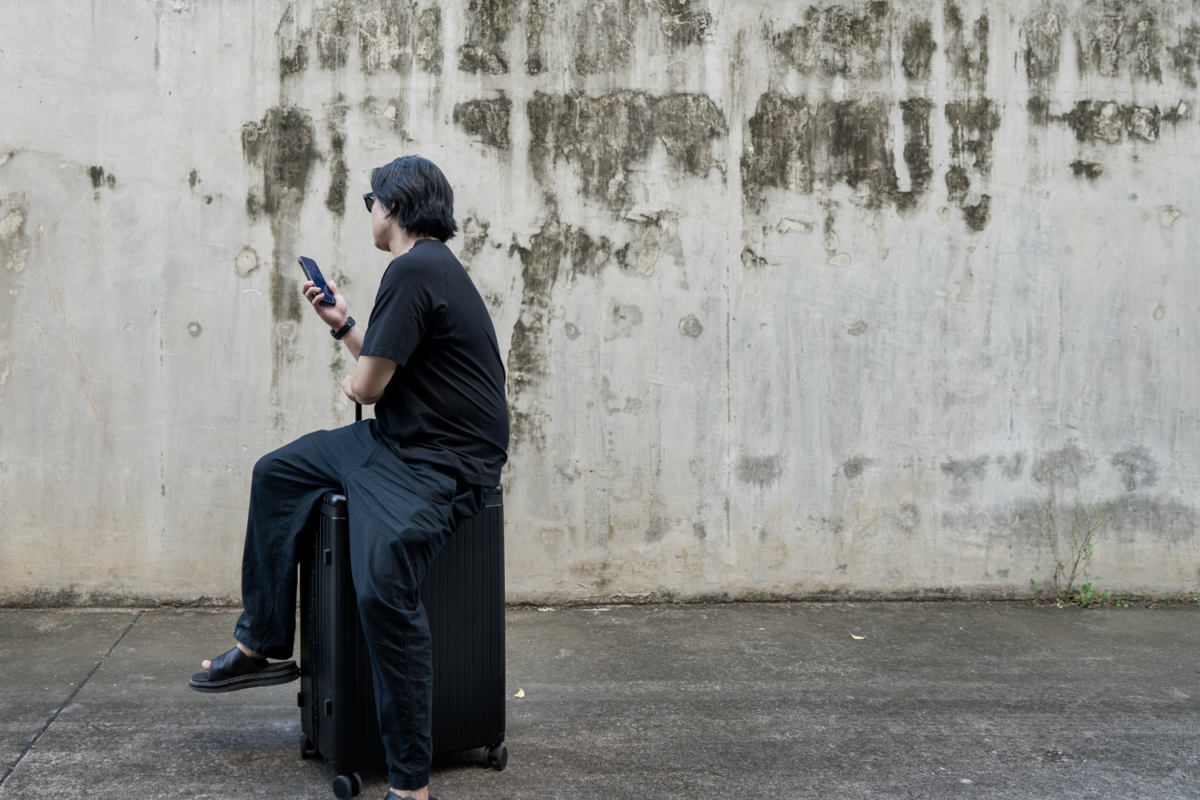
The Large Check-in is a serious piece of luggage for serious amounts of luggage, with 125L of space, excellent wheels and a robust aluminium-frame closure. The 6.9 kg empty weight, huge dimensions and relatively open interior are genuine compromises, but the solid construction and manoeuvrability make its size surprisingly manageable.
Carl Friedrik obviously doesn't have the brand recognition that Rimowa does, but in terms of construction and quality, I would put them on par. And while it is by no means cheap, the Large Check-in is considerably more affordable.
Like this review? See all of my in-depth reviews.
Also, consider supporting me by being a Patreon. Every cent given will go back into improving the content of this website.
Tagged bag carl friedrik luggage review