This website is made possible by readers. I may earn a small commission when you buy through the links in this article at no extra cost to you. Learn more.
Overview
The ATD1 has always been the more extreme bag in the Attitude Supply lineup. Founded in Italy by Michele Fasano, Attitude Supply spent years refining the ATD1 as its flagship design before branching out. Where the ATD2 starts as an everyday bag that can stretch into travel, the ATD1 starts as a travel backpack that dares you to use it as your daily carry too. That distinction matters if you are choosing between them: the ATD2 is the safer daily bag, while the ATD1 is the one I would look at if travel capacity is the priority.

That idea makes a lot of sense on paper. One bag that compresses when you do not need much, then expands when you do. No swapping between a work bag, gym bag and travel bag every other day.
In practice, that kind of promise usually comes with compromise. Bags that try to do everything often end up feeling oversized in daily use or underbuilt for travel.
The ATD1 is one of the more convincing attempts I have used. It still feels like a bag built around a strong point of view, though. This is not a safe, generic travel backpack. It has opinions.
Style
The ATD1 looks surprisingly restrained for a bag that can expand to 55 litres.
That is probably what I like most about it. Packed down, it does not scream travel backpack in the way many expandable bags do. It still looks technical, of course, but in a fairly quiet way.
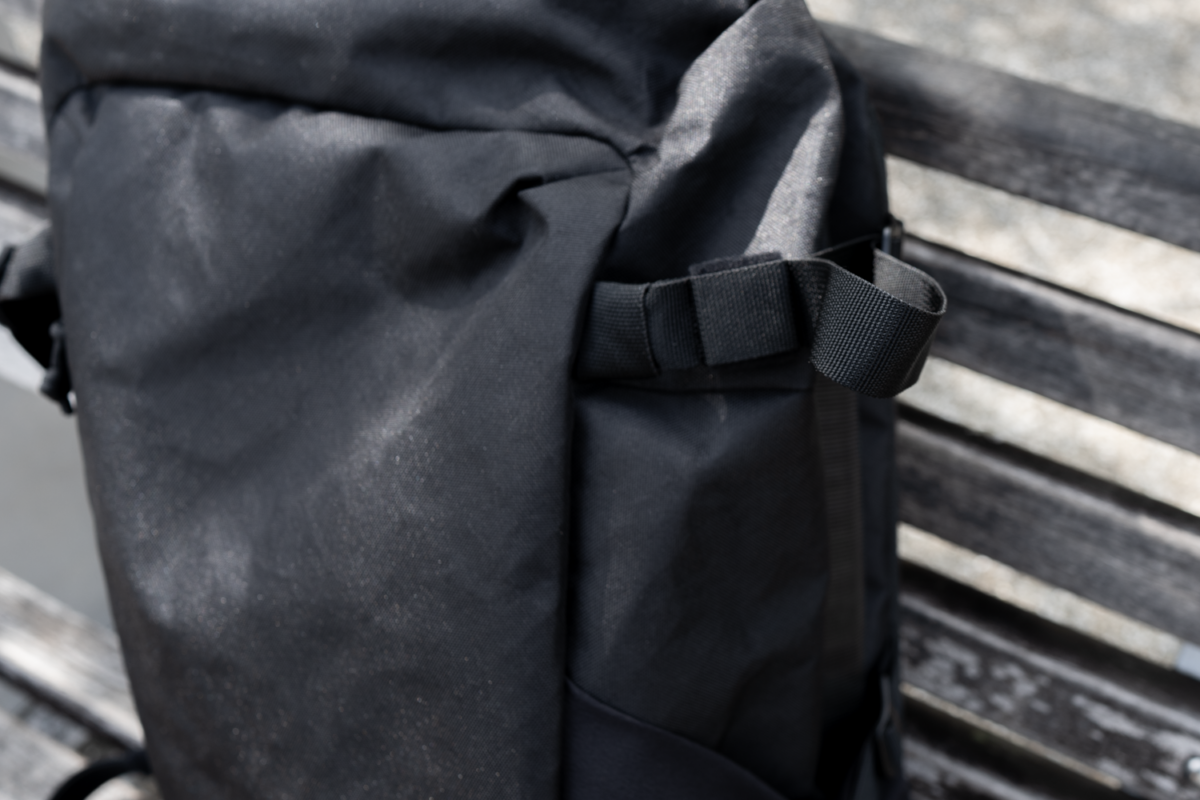
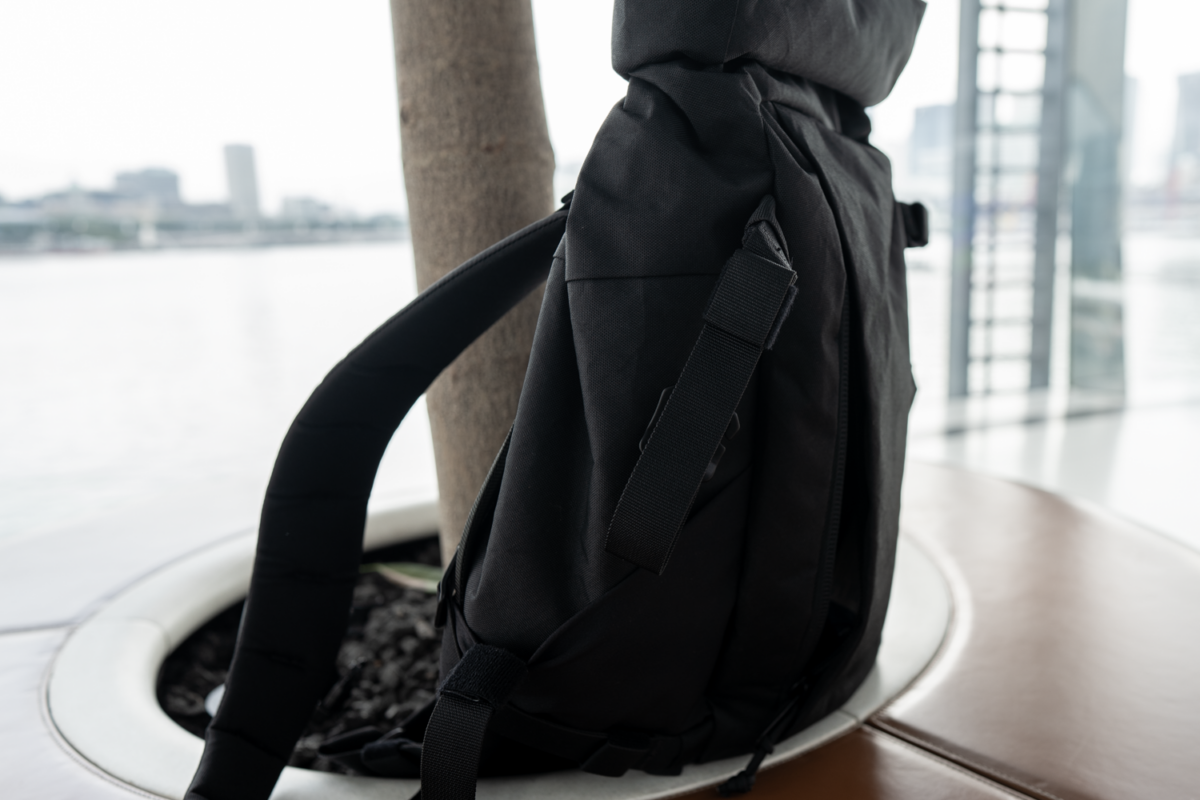
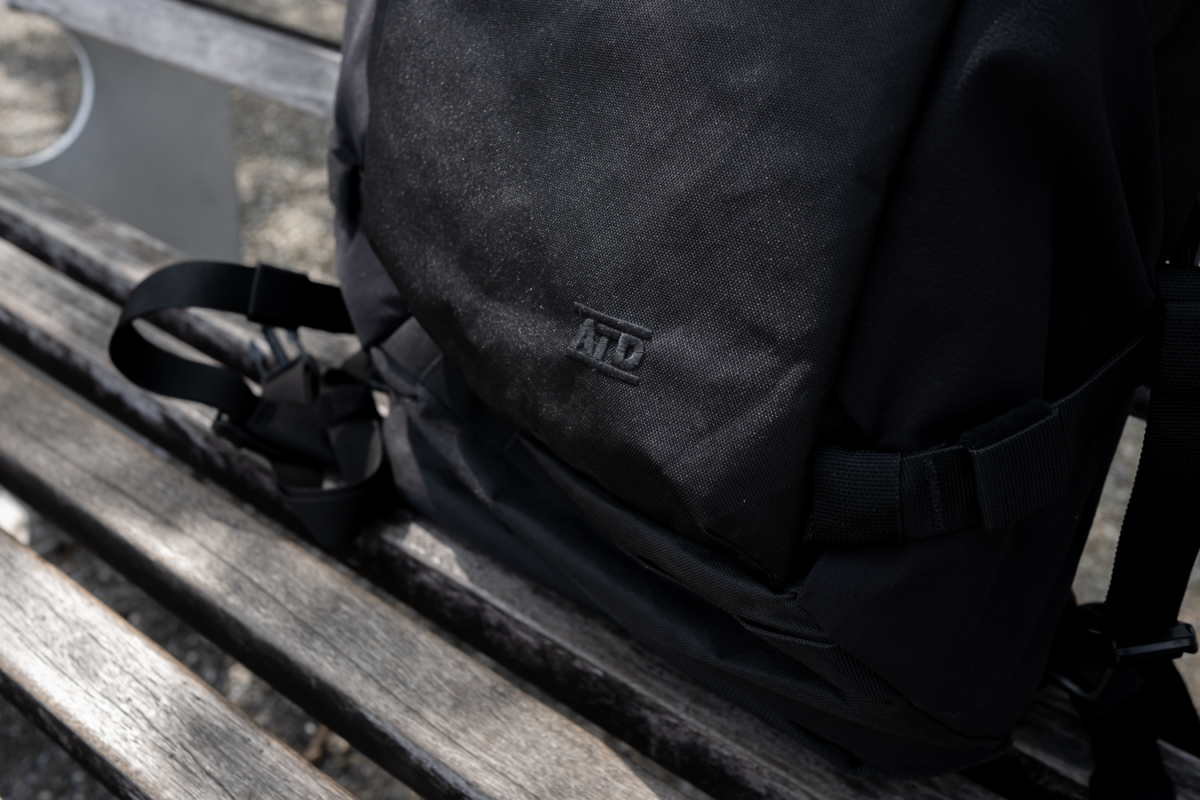
Minimal branding, sharp lines, lots of black, and that familiar ATD silhouette that stays close to the back better than you would expect from something this capable. Even the tubular climbing-style webbing used on the handles adds a subtle touch of industrial utility without breaking the clean aesthetic.
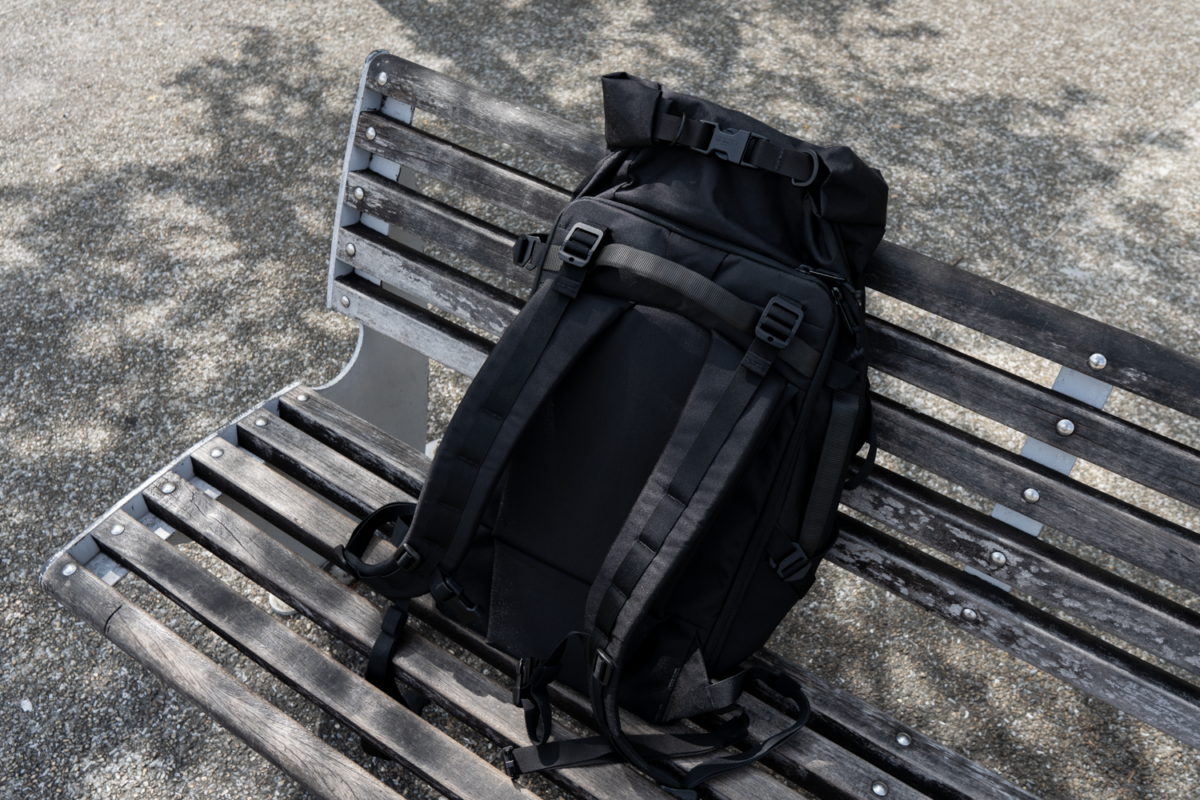
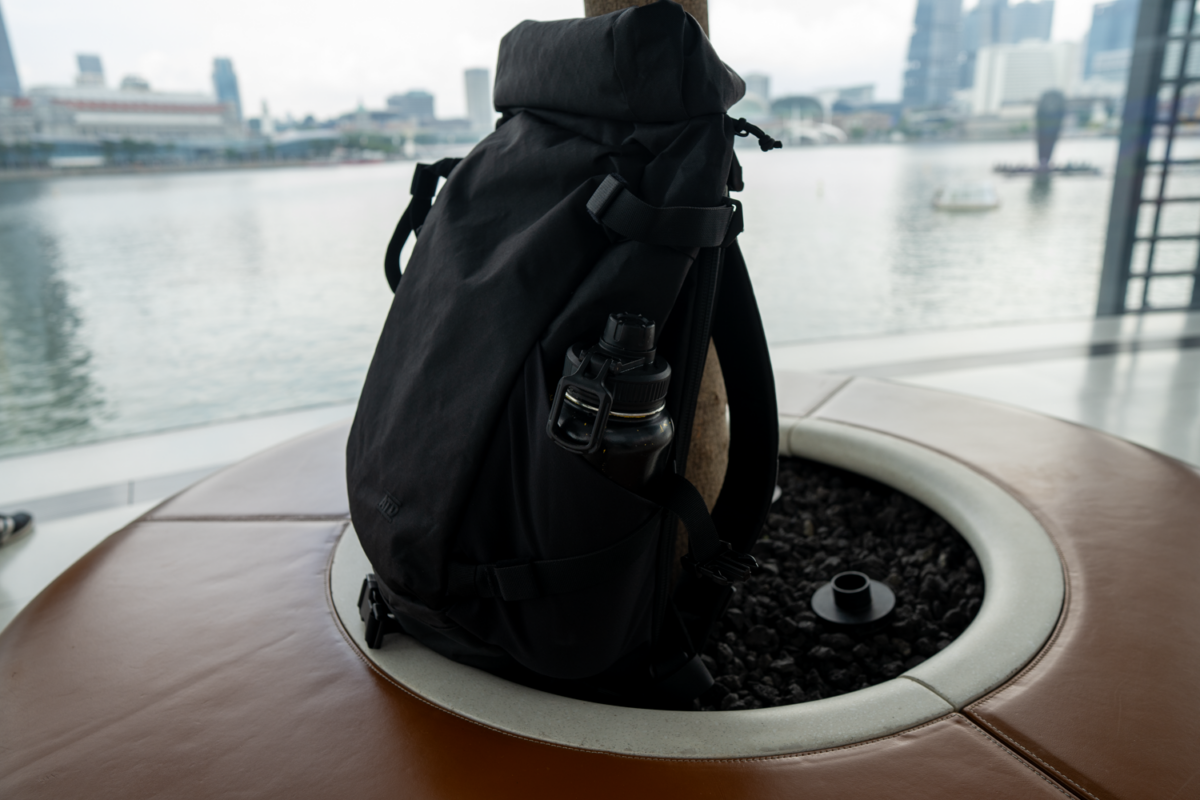
It also helps that the bag has shape. Even when it is not full, it does not completely collapse into a sad fabric tube. There is enough structure here to keep it looking intentional, though the angled bottom does mean it refuses to stand upright on its own—something you notice immediately when waiting around in airport lines or hotel lobbies.
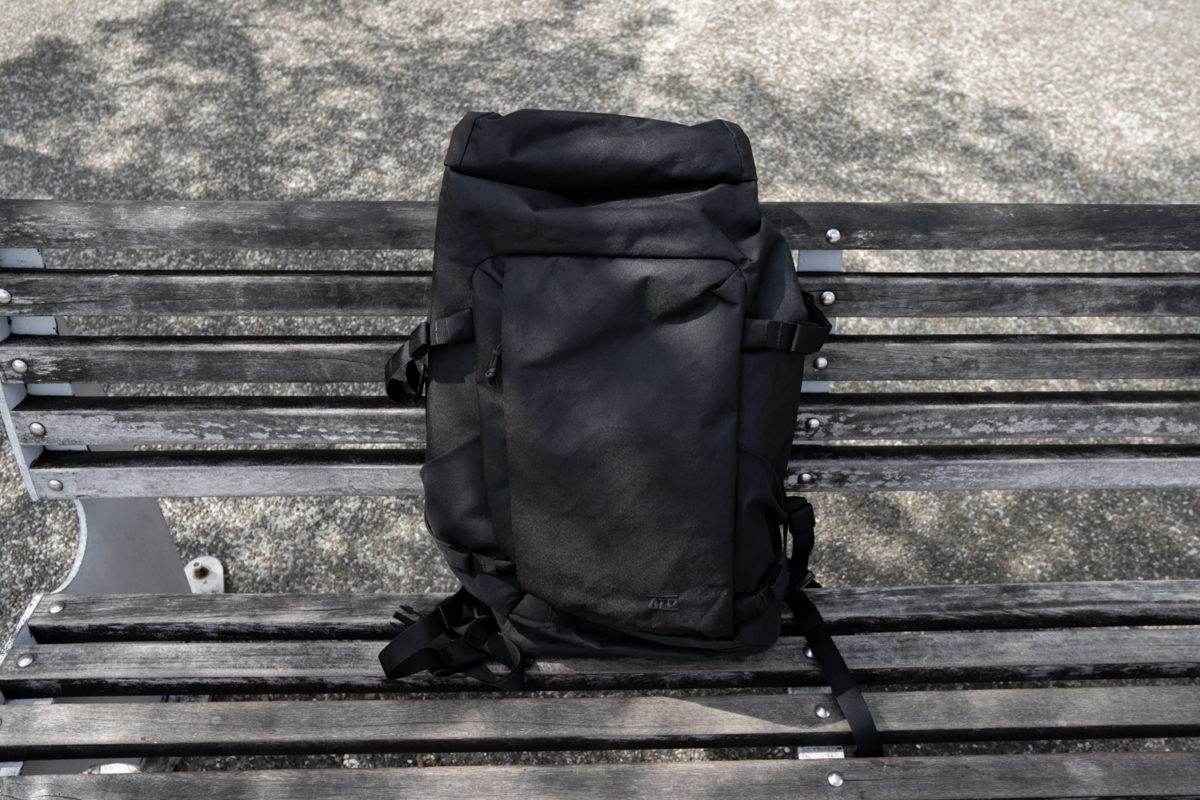
That said, how good it looks as an everyday carry depends quite a bit on how full you pack it.
Compressed down, it looks sleek enough for city use. Once you start pushing the upper end of the capacity, it becomes a different beast. Still looks fine, but definitely more travel bag than casual daypack.
This used to be an ad.
But no one likes ads, so I got rid of them. If my articles helped you, I ask for your support so I can continue to provide unbiased reviews and recommendations. Every cent donated through Patreon will go into improving the quality of this site.
I bought a small form factor PC; a 5080 beast built for me in a Ncase M2 Grater if any of you are part of the PC master race. I had to bring it back in my backpack along with a few of the empty boxes with extra peripherals. I was amazed how much I could pack in there, but I did look and feel like Sam, the porter from Death Stranding.

I think that is fair. A bag that goes from roughly 20L to 55L will do that.
Next to the ATD2, the difference is obvious. The ATD2 looks more naturally proportioned as an everyday backpack, especially if you are mostly carrying work gear and a few extras. The ATD1 can still pass as EDC when compressed, but it always hints that there is a much bigger bag hiding underneath.
Material
The original ATD1 used 500D PU-coated Cordura with DWR, which felt great in hand but had an annoying habit of picking up lint and dust. Newer versions move into more premium laminate territory, using Challenge Sailcloth Ecopak EPLX600 outside and 200D RBC200 lining inside.
The current version leans a little more structured and refined than the older Cordura one. Ecopak—a waterproof laminate made from 100% recycled polyester with an X-Ply reinforcement net—gives the bag a crispness that suits the design well. It sheds lint far better than Cordura, helps the ATD1 hold its shape, and reinforces that slightly architectural feel when viewed from the side.
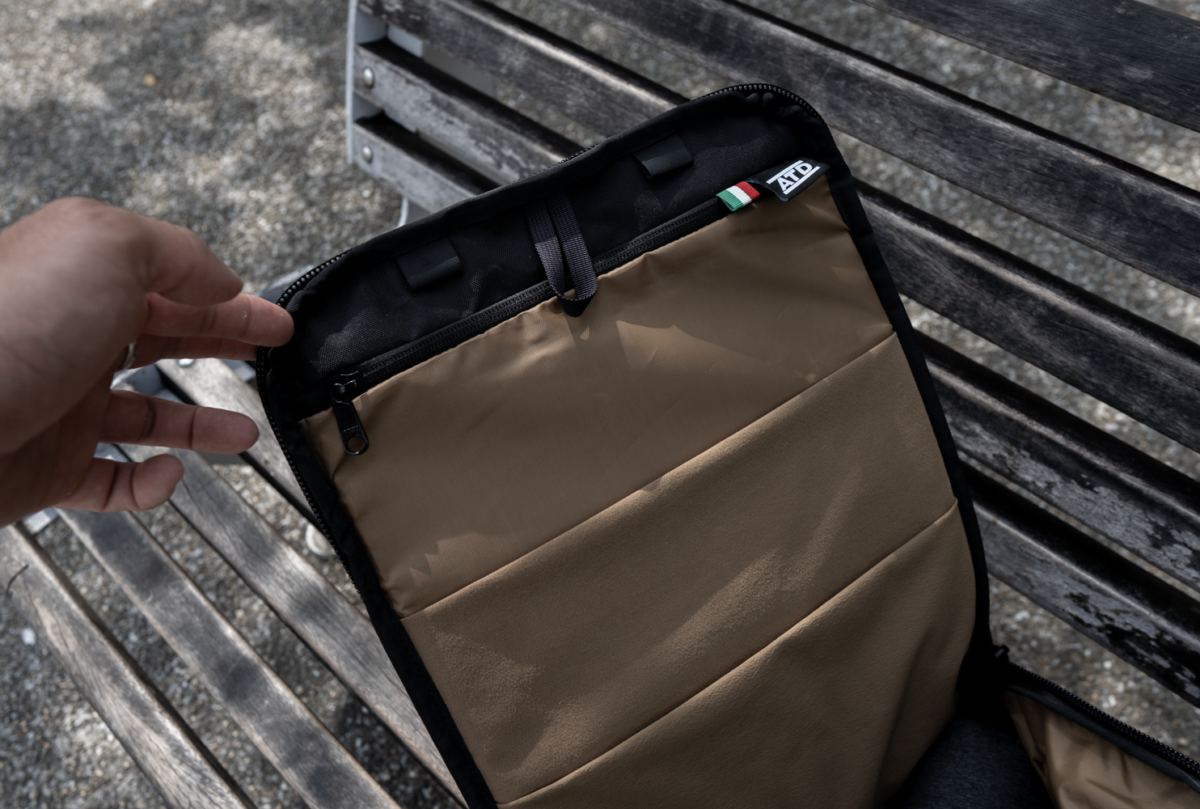
Inside, the semi-floating, DWR-treated 200D lining adds a bright, high-contrast interior that makes spotting dark gear at the bottom of the bag much easier.
The hardware and general construction are also in line with what I expect from Attitude Supply. Nicely finished, overbuilt in the right places, and generally reassuring when you are paying this much.
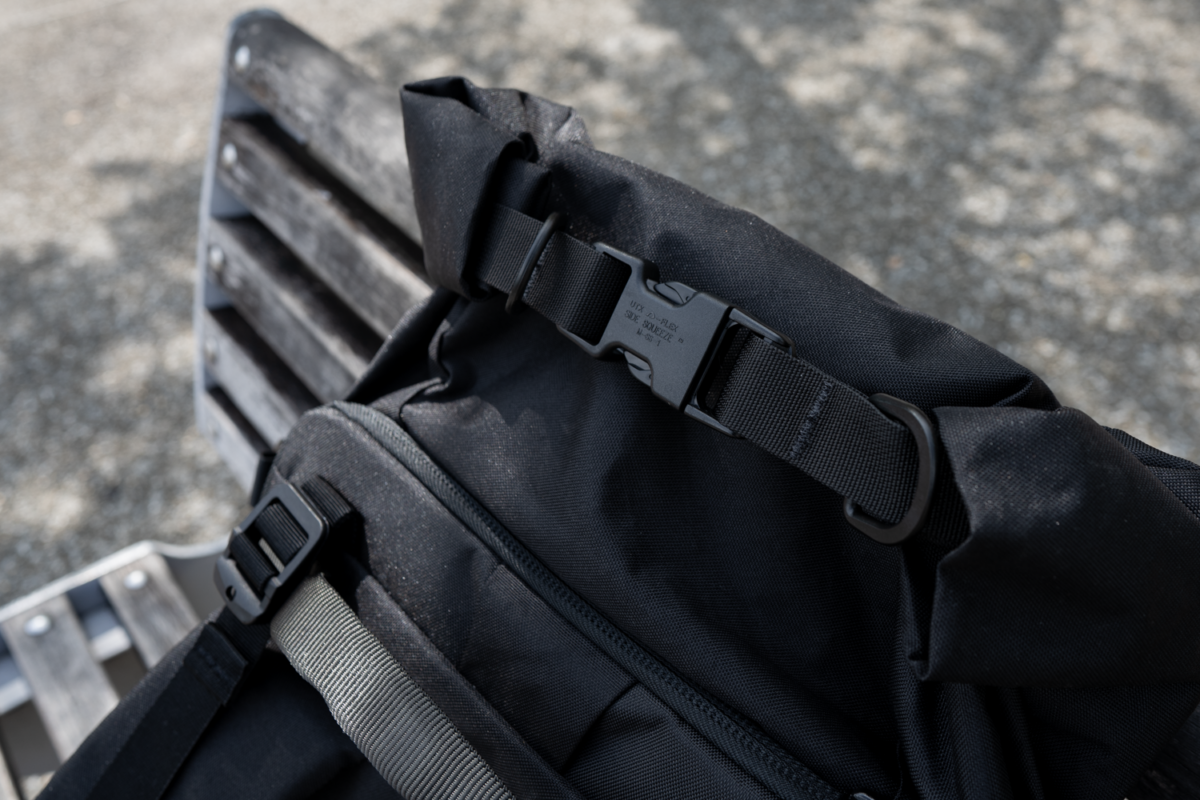
The bag does start out stiff. That applies to the body, and to some extent the straps and zippers as well, particularly around the top corners of the U-shaped back zipper where the thick binding tape catches until broken in. I do not necessarily mind that because this is not meant to feel soft and floppy, but it is worth knowing. This is not one of those bags that feels broken in straight away.
I designed a thing.

I found a 100 year old company that would create these heirloom quality canisters for me. They are handmade and will keep your tea leaves, coffee beans or anything that you need dry for years to come.
or read review
The upside is that it feels robust. The downside is that the ATD1 can be a little demanding until you get used to how it wants to be handled.
Usage
The whole point of the ATD1 is range.
At its smallest, it works as a roomy everyday bag. At its largest, it becomes a legitimate one-bag travel pack. That is a huge spread, and honestly still one of the ATD1's most compelling tricks.
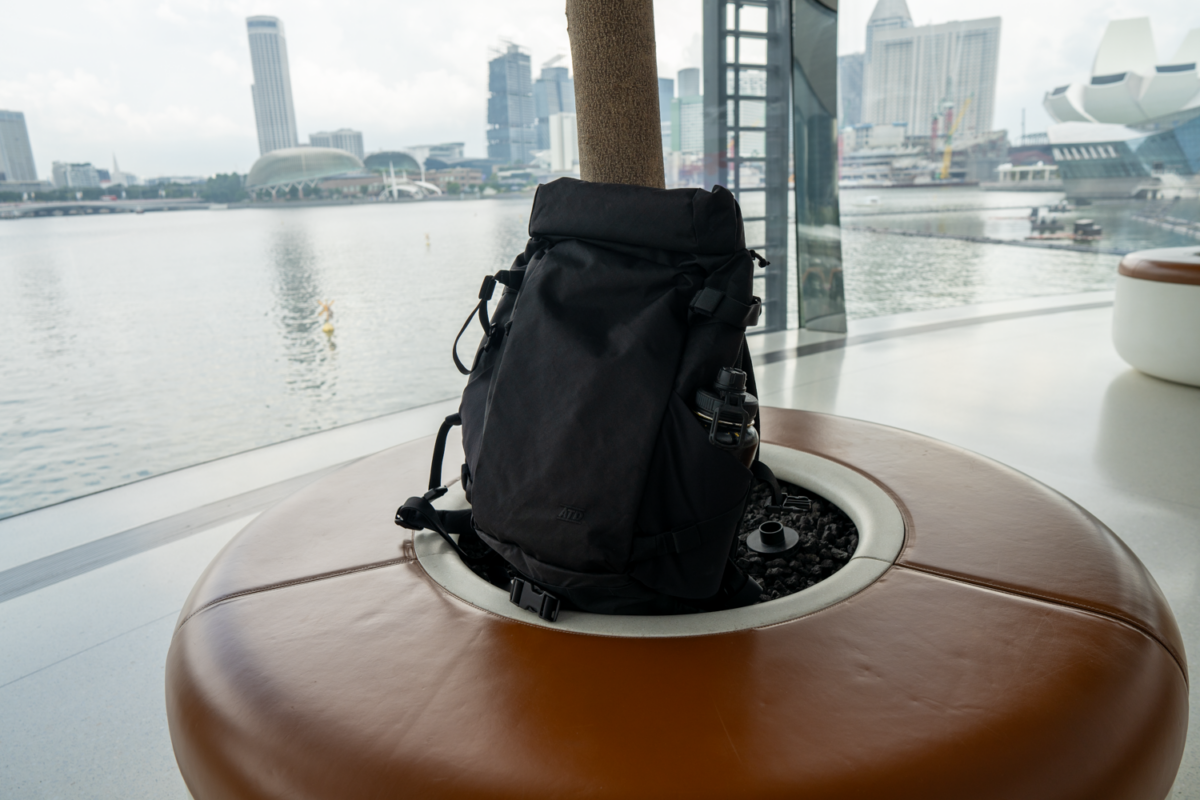
This is also where I would separate it from the ATD2. The ATD2 feels best around everyday carry and short trips; the ATD1 feels best when you actually need the headroom. If your usual load rarely goes beyond a laptop, jacket and gym kit, the ATD2 is probably easier to live with. If you want one bag that can swallow a proper travel load, the ATD1 makes more sense.
I can see why so many people got attached to this bag. Few backpacks move between roles this fluidly without looking completely ridiculous in one of them.
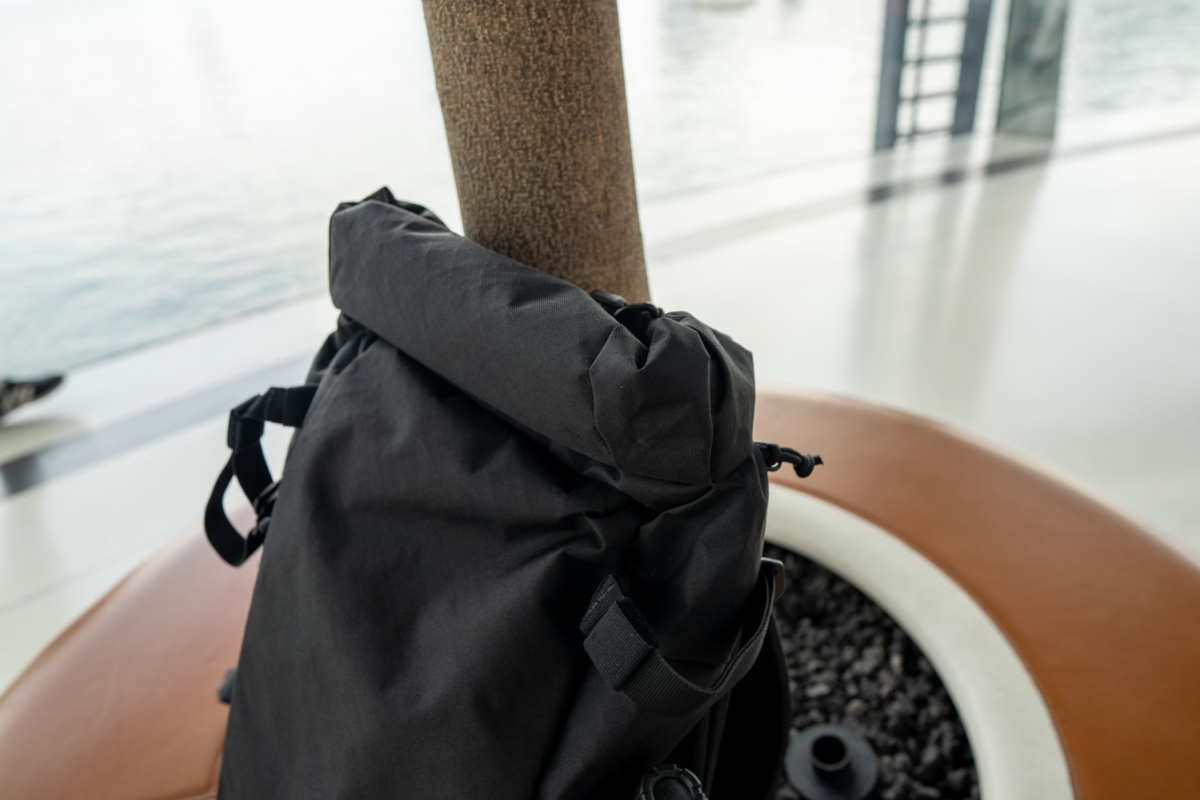
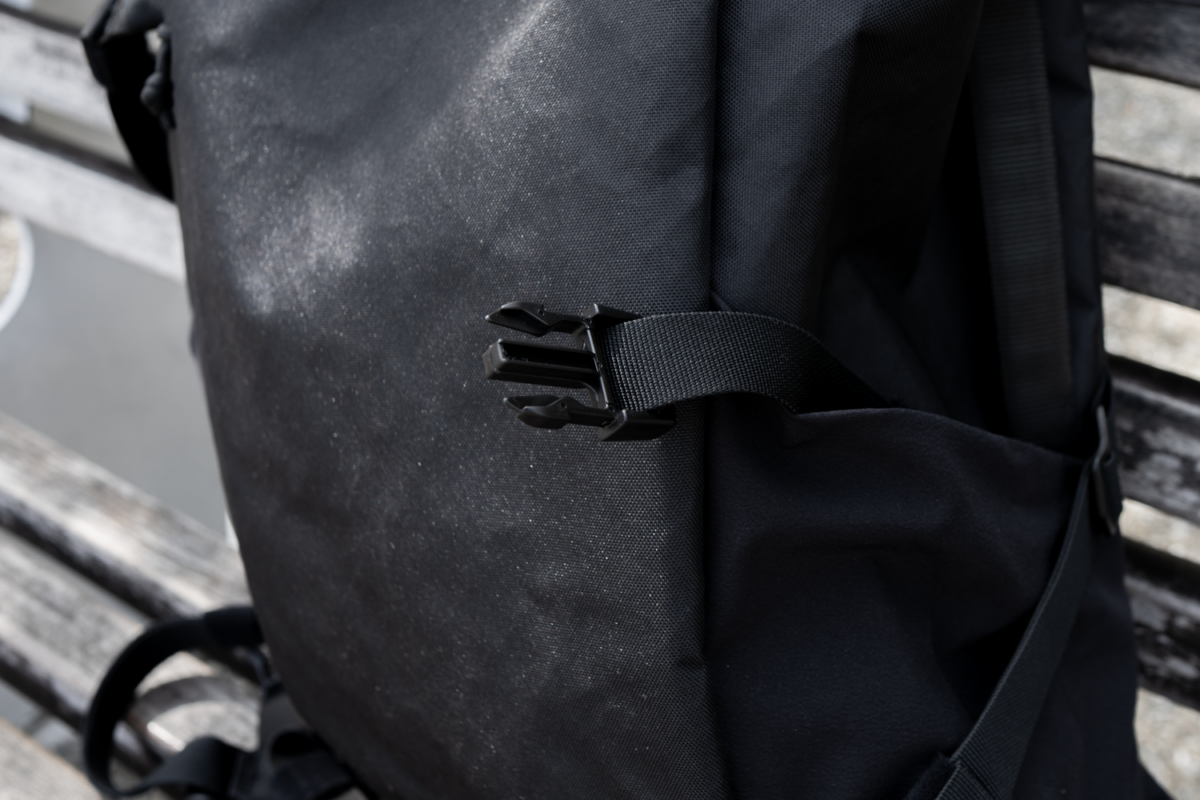
The roll-top closure has a clever trick that took me a moment to figure out. Tucked inside the side pockets are straps with clips that I initially had no idea what to do with. All the while, I had been clipping the roll-top opening buckles together at the top like any standard roll-top bag. It turns out those hidden side straps let you pull the opening clips down and fasten them along the sides instead, cinching the top down cleanly. It is a feature I have never experienced on a backpack before, and it keeps the top from flaring out into an awkward shape.
The only caveat is that it can look messy if unused and left hanging out.
The back panel access is a big part of why the roll-top stays livable. Roll-tops are nice for flexible volume, but they can be annoying once something ends up at the bottom. Here, the clamshell-style rear access gives you another way in, which makes the bag far more usable than a pure top-loader—and doubles as theft deterrence since the main zipper sits flush against your back.
Still, the main compartment is vast. That is great when you need to carry a lot, but less great when a small item has migrated all the way down. You end up sticking your hand in and fishing around blind like one of those raffle draws, hoping to pull out a prize instead of your keys, which can be frustrating when you need something in a pinch.
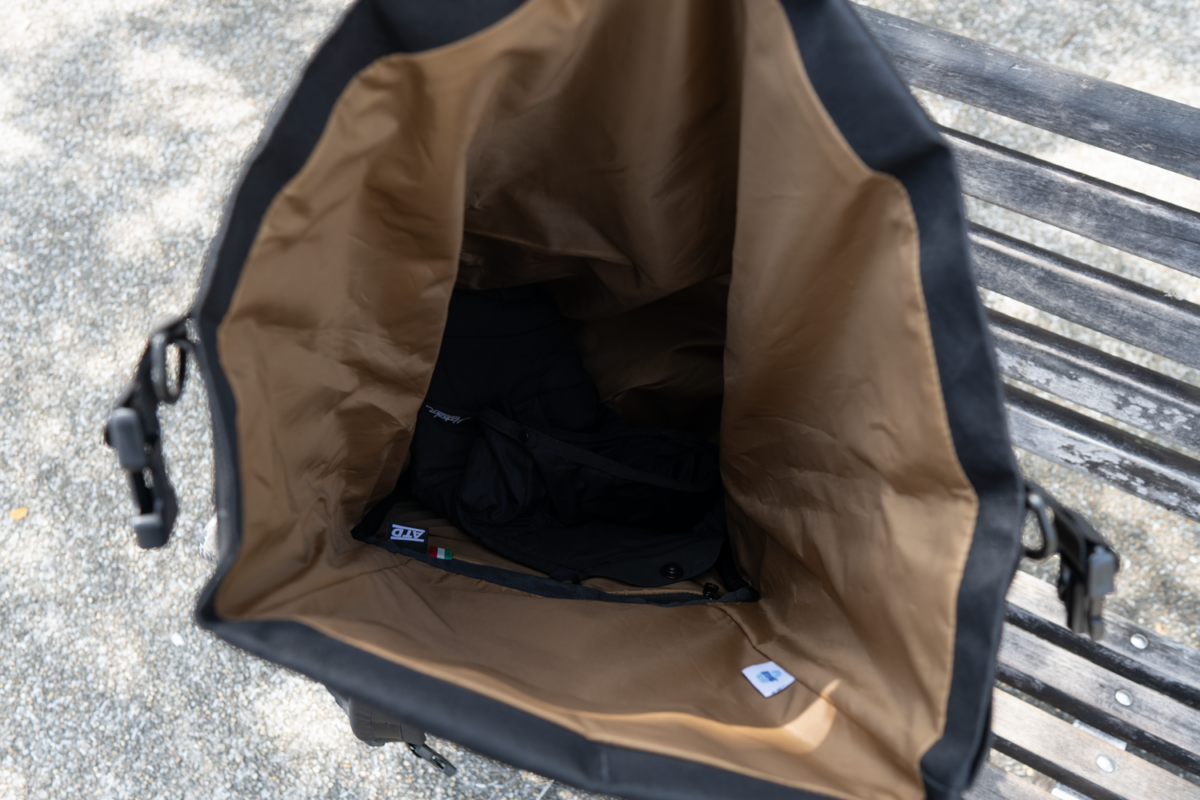
That is really the ATD1 in a nutshell. It gives you a huge amount of space and freedom, but expects you to bring your own discipline.
The front compartment helps. It has its own independent volume that pushes inward when needed, plus internal stretch pockets that easily swallow a power bank, earbuds, or a small tech pouch for faster access. On the newer version in particular, it is much more useful than having one giant cavity and hoping for the best.
Though when the bag is lying flat on its back panel, anything inside that front pocket ends up underneath the weight of the main compartment.
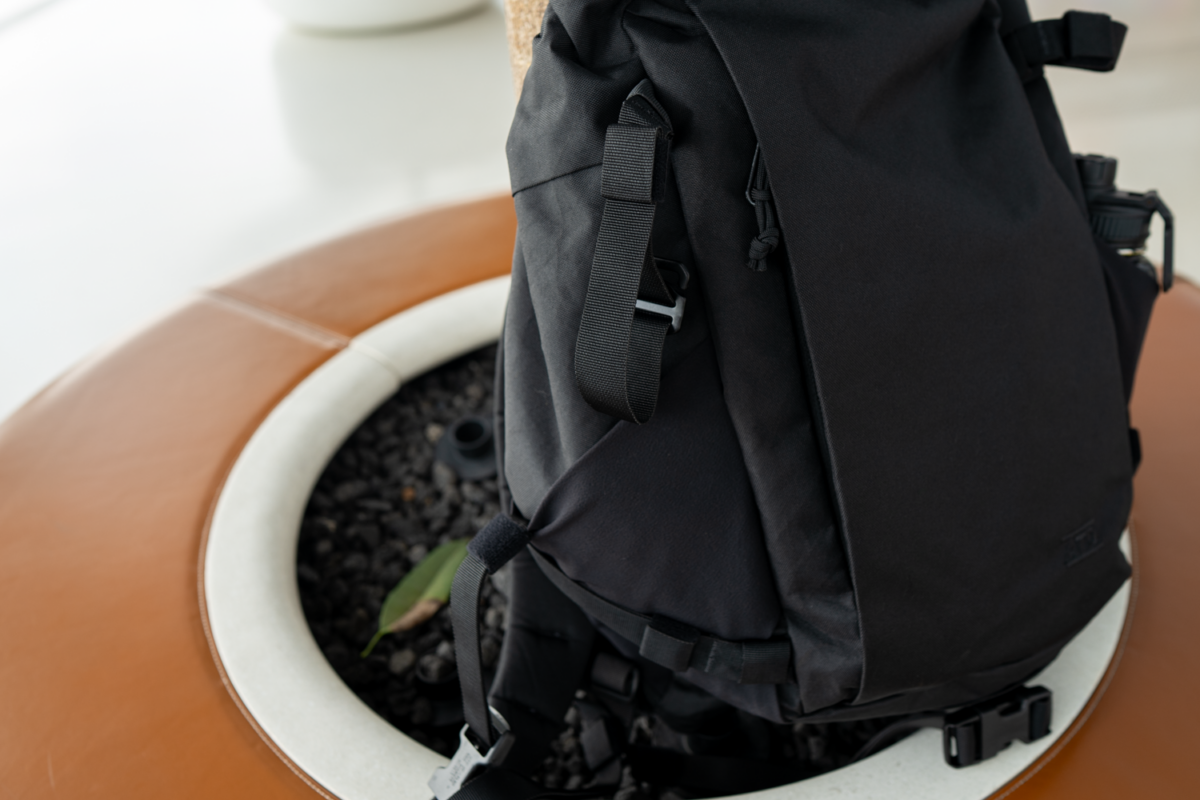
The laptop and tablet setup is functional, but not perfect. There are stretch sleeves on the back panel that hold devices securely enough, though there is no top retention strap. This means if you forget to zip the clamshell corners all the way up, a heavy laptop can try to slide out. Access also gets more awkward once the bag is packed out, as slipping a laptop back in from a partially opened back zip takes more effort than I would like.
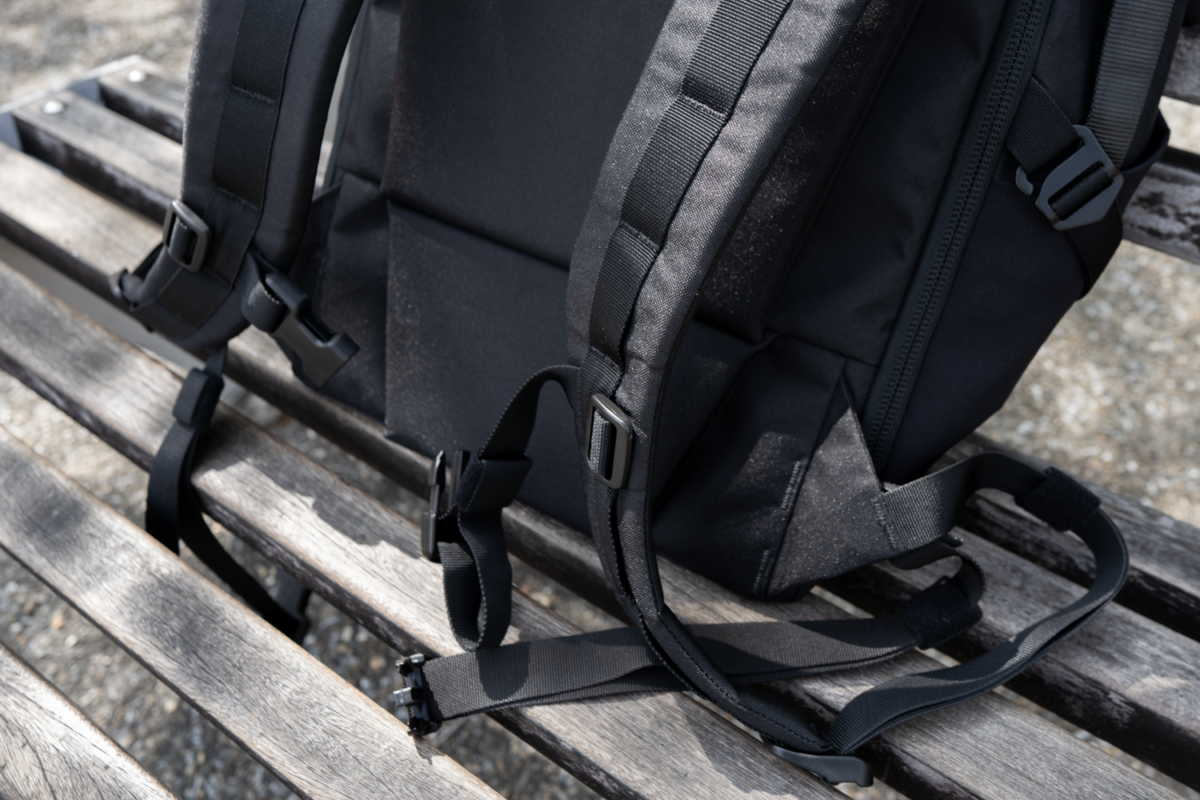
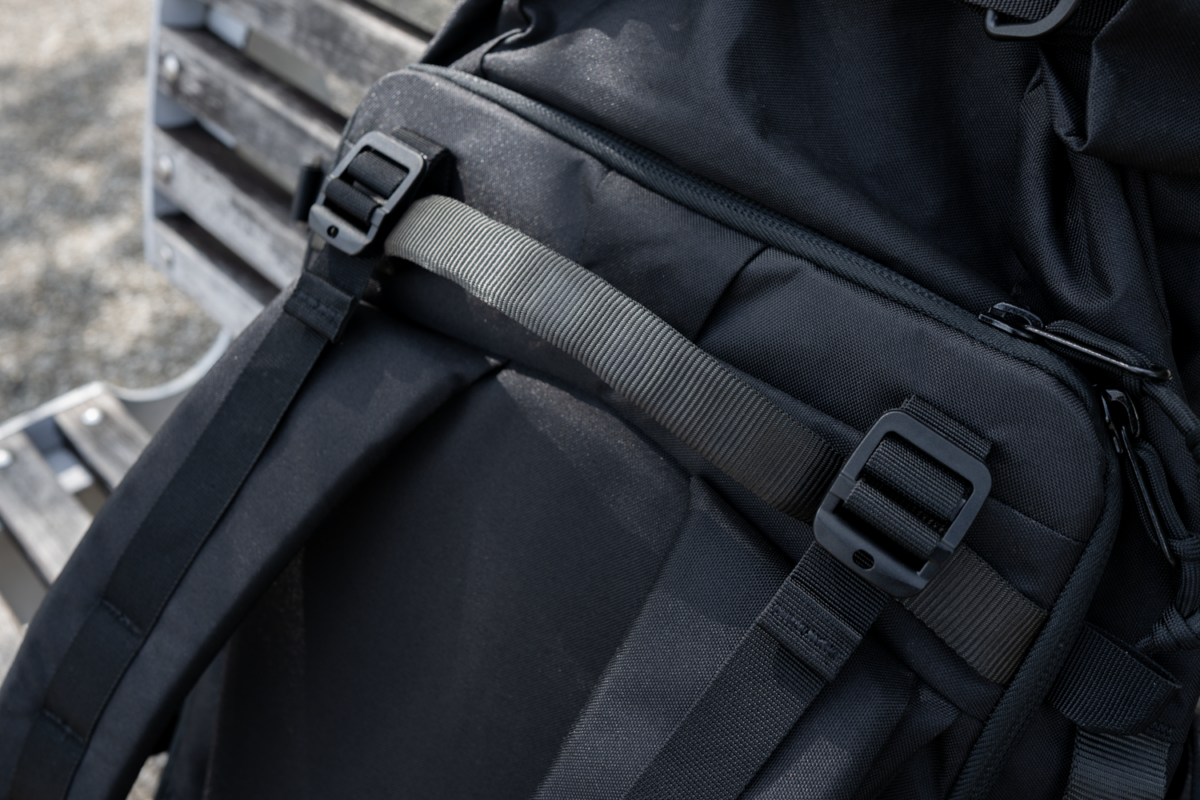
Carry comfort is generally very good. The segmented shoulder straps are well padded, the load lifters let you dial in the weight distribution, and the semi-flexible frame sheet conforms to your back over time. There is a lot of webbing to manage on the sides, especially when the roll-top straps cross over the side handles and water bottle pockets, though the built-in strap keepers help tame the dangle.
One thing I kept doing, though, was grabbing the roll-top when I meant to grab the bag by the handle.
The roll-top sits higher, so my hand naturally goes there first. The actual top handle is comparatively small and sits right against the stiff frame sheet, which can press into your knuckles when carrying a heavy load in a hurry.
The ATD1 also feels more convincing as an everyday bag when you resist the urge to overpack it. If you keep it compressed and carry a sensible load, it wears much smaller than the numbers suggest. If you stuff it, it stops pretending.
Conclusion
The ATD1 is still a very unusual bag, and I mean that as a compliment.
It is not trying to be the neatest office backpack or the most streamlined travel pack. It is trying to cover a huge range of use cases with one design, and for the most part it actually succeeds.
What I like is that it does not feel gimmicky. The expandability is genuinely useful. The back access makes sense. The compression system helps it stay presentable when you are not using all that space. And visually, it remains one of the better-looking bags in this category.
What I like less is that living with all that volume comes with trade-offs. The main compartment can feel cavernous. The top handle is easy to miss and presses your knuckles against the back panel under heavy loads. The bag won't stand up on its own. And like many structured premium bags, it asks for some break-in and some patience.
Still, if you want one bag that can move from everyday carry to proper travel without looking like a hiking pack the whole time, the ATD1 makes a very strong case for itself.
Between the two, I would choose the ATD2 if I wanted an everyday backpack first and an occasional travel bag second. I would choose the ATD1 if I wanted a travel backpack first, but still cared about it compressing into something presentable for daily use.
It is a bag with a clear identity. Not everyone will need what it does. But if you do, there still are not that many bags that do it this well.
Additional Images